Kakšne so točno razlike med temi običajnimi plastikami: PE, PP, PVC, ABS in PC? (3)
Zakaj je bil izbran ta poseben material?
Ali prednosti tega materiala popolnoma ustrezajo njegovemu scenariju uporabe?
Kje je najverjetnejša točka okvare dela?
Ali je preprosto navedeno ime materiala zadostno za ponazoritev vseh pomembnih podrobnosti?
Izbira plastičnega materiala nikoli ni zgolj pomnjenje tabel materialov, temveč racionalno presojanje na podlagi dejanskih pogojev uporabe.
Vir: Uradni račun WeChat
Secondly, PC is sensitive to certain chemical substances. When exposed to alcohol, detergents, oils, solvents or alkaline environments combined with internal stress, it tends to suffer from stress cracking. Most transparent PC parts are not damaged by impact, but gradually develop tiny cracks under prolonged stress and chemical erosion.
Thirdly, PC does not have exceptionally high surface hardness. Transparent PC products are prone to scratches, hence a hard coating is applied for many applications.
Fourthly, weather resistance and anti-ultraviolet performance must be taken into account if PC is used outdoors long-term. Without proper modification, yellowing and deterioration of mechanical properties will occur over time.
Hence, PC teaches us a lesson: even high-performance materials have their limitations. Transparency and outstanding impact resistance do not equate to resistance against all chemicals. Premium materials will also fail if processing and service conditions are incompatible.
VII. The differences will become much clearer when we compare these materials side by side.
For a simplified comparison, we can summarize them as follows:
PE is ideal for packaging, containers, pipes, and applications requiring excellent chemical resistance.
PP is widely used for lightweight daily necessities, food containers, home appliance components, automotive parts and living hinges.
PVC is suitable for formulated applications including pipes, wire insulation, profiles, flooring and flexible hoses.
ABS is preferred for housings, toys, home appliances, automotive interiors and other products demanding attractive appearance and balanced overall properties.
PC applies to scenarios with high requirements for transparency, protection, impact resistance and heat resistance.
This is only the preliminary judgment. For practical application, further factors need to be evaluated as listed below:
Outdoor exposure requirement
Long-term high-temperature service
Low-temperature impact resistance
Repeated bending conditions
Long-term load-bearing
Contact with oils, alcohol, detergents, solvents, acids and alkalis
Flame retardancy requirement
Transparency requirement
Compliance for food contact or medical contact
Compatibility with painting, electroplating, bonding and printing processes
Permitted usage of recycled materials
Expected service life
The material grade is merely a starting point, not the final solution.
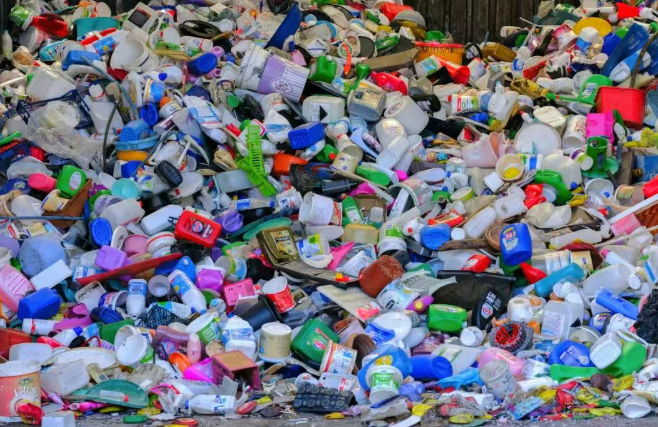
Even materials bearing the same name PP can be general-purpose PP, glass fiber reinforced PP, flame-retardant PP, weather-resistant PP or food-contact grade PP.
Likewise for ABS: there is standard grade for casings, as well as flame-retardant grade, plating grade, heat-resistant grade and high-impact grade.
When it comes to PC, options include conventional transparent grade, flame-retardant grade, optical grade, UV-resistant grade, as well as variants with hardened coating treatment.
Therefore, never regard the abbreviated material name as your final selection conclusion.
A more accurate statement should be as follows: A specific material grade, formulated and processed under certain recipes and production techniques, is only suitable for designated application scenarios.
This wording may not sound as straightforward as claims such as "ABS is better" or "PC is higher-grade", yet it aligns far more with the realities of actual manufacturing.
VIII. Several Common Misconceptions
1. Not all transparent plastics are PC
Numerous transparent plastic parts look virtually identical, yet they can be made from completely different materials. PC, PMMA, PS, PET, transparent ABS and transparent PP can all be manufactured into transparent or translucent products.
PC delivers excellent impact resistance but is prone to scratching and vulnerable to chemical stress cracking. PMMA boasts superior transparency and surface hardness, though its impact toughness is relatively poor. PS is low-cost and transparent, yet highly brittle.
Therefore, transparency is merely an appearance characteristic, not a material designation.
2. Food-contact compliant does not mean safe for arbitrary high-temperature use
Many PE and PP materials are approved for food contact applications. However, food contact certification is separate from high-temperature resistance.
Whether a container can hold hot oil, be used in microwave ovens, or withstand repeated long-term steaming and boiling depends on its specific material formulation, additives, structural design and relevant certification standards.
You cannot simply assume all usage scenarios are safe solely because a product is marked "food-grade".
3. Hard plastics are not necessarily more durable than soft plastics
Hardness only reflects tactile feel and rigidity. Durability is determined by specific performance indicators including impact resistance, fatigue resistance, weather resistance, heat resistance, chemical resistance, creep property and abrasion resistance.
Certain rigid plastics crack easily upon dropping, while some flexible materials offer better resistance to repeated bending and falling damage.
Tactile sensation can only serve as a subjective reference and cannot replace professional material evaluation.
4. Engineering plastics can also be improperly applied
Materials such as PC, PA, POM, PBT and PPS are generally referred to as engineering plastics. Nevertheless, engineering plastics are not universal all-purpose materials.
PA absorbs moisture easily; POM requires caution against acidic environments and thermal degradation; PC is susceptible to chemical stress cracking; PBT needs strict control over hydrolysis and processing parameters.
Higher-grade engineering plastics provide broader application possibilities, but they still cannot be used without matching the actual service conditions.
Most people have come across names such as PE, PP, PVC, ABS and PC. However, memorizing these terms is not truly useful; what matters is understanding their respective applicable scenarios as well as their inherent weaknesses and vulnerabilities.
You may briefly memorize these materials as follows:
PE: Used for packaging, containers and pipes, excellent chemical resistance. Limitations: mediocre heat resistance, poor adhesion performance, susceptible to outdoor aging.
PP: Lightweight, cost-effective, superior heat resistance compared with PE. Ideal for daily necessities and automotive parts. Limitations: unsatisfactory low-temperature impact property and weather resistance.
PVC: Available in rigid and flexible forms with extensive formulation adjustability. Applied to pipes, electric wires and profiles. Points to note: plasticizer selection, thermal stability and odor issues.
ABS: Attractive surface finish, easy processing, balanced comprehensive properties, widely adopted for product housings. Limitations: poor weatherability, limited heat resistance, prone to solvent cracking.
PC: High transparency, outstanding impact resistance and decent heat resistance, perfect for protective components and transparent structural parts. Points to note: easy surface scratching, chemical stress cracking risk, strict drying requirement before processing.
Once you understand all these differences, you will be able to raise several key questions when examining any plastic product:
Why was this specific material chosen?
Do the advantages of this material perfectly fit its application scenario?
Where is the most likely point of failure for the part?
Is the simply listed material name sufficient to illustrate all relevant details?
Plastics material selection is never about memorizing material charts; it is about making rational judgments based on actual service conditions.
Source: WeChat Official Account
Ko boste razumeli vse te razlike, boste pri pregledu katerega koli plastičnega izdelka lahko postavili več ključnih vprašanj: